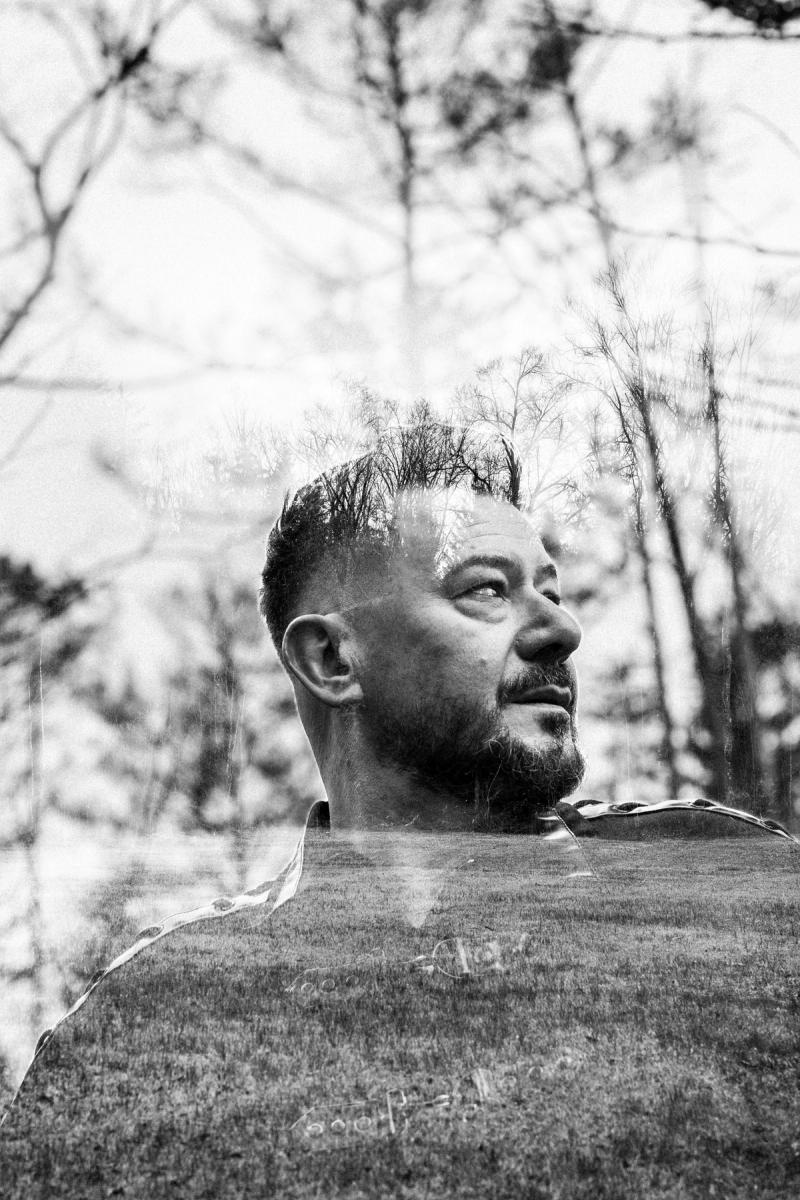
Artist
Black Reuss
Interview Date
February 15, 2026
Interview with Black Reuss
An interview with Black Reuss
There’s something about Black Reuss that never feels surface level. It isn’t just heavy for the sake of heaviness, and it certainly isn’t darkness dressed up as aesthetic. Beneath the weight of the riffs and the intensity that defined Death, there’s intention, calculated, personal and at times uncomfortably honest.
Black Reuss has always carried an aura of isolation and control, blending crushing instrumentation with a sense of introspection that feels almost claustrophobic in the best possible way. It’s a project that doesn’t just release music, it builds a presence.
Following the impact of Death, we wanted to go deeper. Not just into the album itself, but into the mind behind it. The philosophy. The persona. The evolution. Because with Black Reuss, the music feels like only part of the story.
So we stepped beyond the obvious questions and into the core of what makes this project tick.
This is Black Reuss, unfiltered.
1. Death feels like a transformation record rather than just a dark one. Was there a specific personal shift that acted as the catalyst for this album?
A) There wasn’t a specific personal shift that triggered this album. Death was always part of the tetralogy from the very beginning. The four chapters were defined early on and this record represents the final stage of that life flow. Each album reflects a different state within that progression, and Death completes it. The sense of transformation isn’t the result of a sudden change in my life, it’s the natural conclusion of a concept that was structured from the start. 2. The album carries a strong sense of internal confrontation. When writing, do you see yourself as the protagonist, the antagonist, or the observer of your own story?
A) With the previous albums, I could speak much more directly from my own experience. Those chapters were rooted in personal processes I had lived through. Death was different. I don’t have real experience with death itself, so the writing wasn’t about confronting something inside me in the same way. Instead, I approached it more as an observer exploring different interpretations of death. The songs reflect various perspectives, suspension, dissolution, continuation and peace rather than a personal conflict. It was less about inner confrontation and more about examining a subject from different angles without claiming to understand it fully. 3. If Death were experienced as a physical space instead of a record, what would it look and feel like?
A) It would feel wide and quiet. Not dramatic or threatening, but vast and open. I imagine a space where movement slows down, maybe a shoreline where a river meets the sea. The horizon would be blurred, and the air heavy but calm. It wouldn’t feel like fear or chaos. More like suspension and absorption. A place where definitions dissolve and sound travels slowly. A space that allows stillness rather than demanding reaction. 4. There’s a tension throughout the album between destruction and rebirth. Do you believe growth always requires collapse first?
A) I would rather say growth requires letting go and acceptance. As long as you don’t see and accept something, you can’t grow. You have to recognize the gap between where you are and where you want to be. Only when that gap becomes clear and you accept it, can growth begin. Collapse can be challenging. It doesn’t automatically lead to transformation. Collapse can also mean an end. You might not always stand up again. But if you do manage to stand up after a collapse, and if you understand how it happened, then it can become a turning point. You can learn from mistakes but only if you survive them. Sometimes mistakes can be final. So growth isn’t guaranteed by destruction. It depends on awareness, acceptance, and the ability to rise again. 5. How do you know when a song is emotionally honest versus when it’s just aesthetically “dark”?
A) For me, emotional honesty feels grounded and calm. When something is just aesthetically dark, it often feels exaggerated or forced. If I notice that I’m trying to create an effect instead of expressing something real, that’s usually a sign it’s not honest. An honest song doesn’t need to convince anyone. It doesn’t need dramatic gestures or extreme language. It simply exists. If I can listen back to it and it feels natural, not theatrical then I know it’s emotionally true. 6. Many artists romanticise darkness. How do you prevent that line from being crossed in your own work?
A) I don’t think romanticising darkness is necessarily wrong. It depends on how you approach it. Take melancholy, for example I have an affection for that mood. It can be reflective, calm, even beautiful in its own way. It doesn’t always mean suffering. Of course, sadness can hurt, but that’s not what I’m trying to glorify. I’m not interested in celebrating pain or turning it into spectacle. What interests me is atmosphere, the quiet weight of certain emotional states. So for me, the line isn’t about avoiding darkness. It’s about avoiding exaggeration. As long as the mood feels honest and grounded, it doesn’t become romanticised in a superficial way. It simply becomes part of the emotional landscape. 7. Was there a moment during the writing of this album where you felt genuinely uncomfortable with how exposed the material was?
A) Not in the same way as with previous albums. Since Deathdeals with interpretations rather than personal experiences, it didn’t feel as directly exposed. It was more conceptual than confessional. The discomfort came more from the subject itself from trying to approach something that can’t truly be known. That uncertainty was challenging, but not in a vulnerable or autobiographical sense. 8. Your vocal delivery feels restrained rather than explosive. Is that a conscious choice to internalise the chaos rather than dramatise it?
A) Yes, it’s a conscious choice but not only conceptual. I believe everyone should find their strength and stay with it. I’m not a shouter, simply because I can’t do it. It’s not my natural ability. I never considered myself a great singer in a technical sense. For me, it’s not about vocal performance, it’s about transporting the message in a way that feels honest and comfortable. Restraint works better for that. Intensity doesn’t always need to be loud. Sometimes it becomes stronger when it stays contained.
9. If someone misinterprets Death entirely, does that frustrate you or do you believe once the music is out, it no longer belongs to you?
A) It doesn’t frustrate me. Once the music is released, it belongs to the listener as much as it belongs to me. Interpretation is personal, and I don’t expect people to experience it the same way I experienced writing it. Especially with an album like Death, which is built around different interpretations of the same theme, there isn’t one “correct” meaning. 10. The concept of “death” can mean ego death, emotional death, identity death. Which version resonates most strongly with you personally?
A) To be honest, none of them specifically. Writing this album was never about making a personal statement about what death means. The intention was to bring different interpretations of death to the table rather than choosing one perspective. If I had to select one from those mentioned, it would probably be identity death, the idea that parts of who you are can dissolve over time. But even that is just one possible angle. 11. Do you feel lighter or heavier after completing an album like this?
A) Lighter. Finishing Death and with it the entire tetralogy felt like releasing something I had been carrying for years. The concept was clear from the beginning, and bringing it to completion created a sense of closure. It feels like space has opened up. 12. When you revisit these songs months or years from now, do you think they’ll feel like documentation of who you were or reminders of who you don’t want to become again?
A) They will feel like documentation. Each album captures a specific stage within the concept and within a certain time of my life. I don’t see them as warnings or something I want to distance myself from. They belong to the journey. 13. Was there a particular sound or sonic texture on this record that symbolised something very specific for you?
A) Yes, sustained tones and decay were very important. The way certain sounds fade slowly into silence symbolises dissolution. It’s not about abrupt endings, but about gradual disappearance. The space between sounds carries meaning. 14. If this album had ended in pure despair instead of quiet acceptance, would that have felt more honest or just easier?
A) It would have been easier. Despair is dramatic and clear. But quiet acceptance felt more honest. Ending in chaos would have been more obvious, but less true to the concept. Acceptance reflects completion. 15. Looking forward, do you see the next chapter of Black Reuss continuing this introspective path, or does transformation also mean shedding this skin entirely?
A) Black Reuss will continue, but not within another long conceptual cycle like the tetralogy. Finishing Death closed that structure and created freedom. The introspective element will likely remain, because that’s part of how I write. But transformation also means allowing change. The next chapter won’t shed the skin entirely, it will grow from it. The core remains atmosphere and reflection, but the form can evolve. allowing change. The next chapter won’t shed the skin entirely, it will grow from it. The core remains atmosphere and reflection, but the form can evolve.