Artist
Those Made Broken
Release Date
September 1, 2026
Type
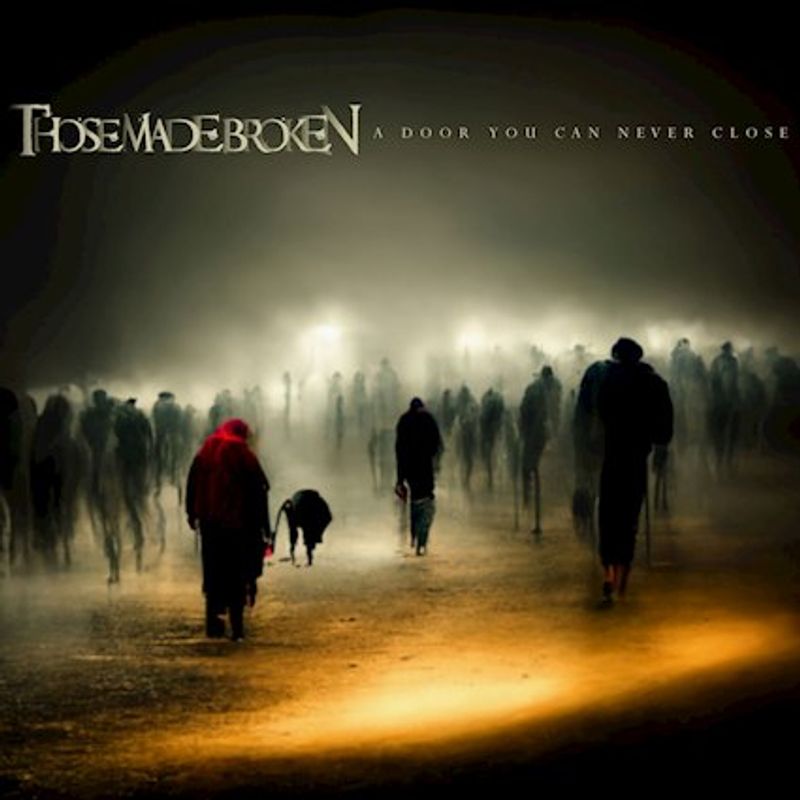
A Door You Can Never Close
There are records that arrive with the intention of making an impression and then there are records that feel as though they have simply reached the point where they needed to exist. A Door You Can Never Close, the second full length release from Those Made Broken, feels much closer to the latter. There is no sense of a band desperately trying to prove how heavy, clever or ambitious they can be. Instead, the album comes across as a collection of ideas that have been allowed to develop naturally, with the emphasis firmly placed on the impact of the songs themselves.
What makes the record interesting is the way it refuses to sit comfortably inside one particular corner of rock music. There is plenty here for anyone who enjoys music with some weight behind it but calling it simply a heavy rock record would miss a lot of what gives it character. There is melody running through its foundations, alongside a darker alternative rock sensibility and an instinct for writing riffs that carry as much rhythm as they do distortion. It is music that can be forceful without needing to spend its entire running time trying to flatten everything in its path.
That balance is established through the songwriting. The songs are constructed around recognisable ideas rather than technical demonstrations, and that gives the album an immediacy that becomes increasingly valuable as it progresses. You don’t get the feeling that the band are trying to make every individual moment compete for attention. Instead, sections are allowed to serve their purpose. A riff can establish the mood, a vocal can pull the listener further into it and a chorus can provide the release without everything needing to be turned up to eleven beforehand.
It is that understanding of restraint that gives the heavier moments their effectiveness. When a record is permanently operating at maximum intensity, eventually the listener becomes accustomed to that level of energy. The impact disappears. Those Made Broken avoid that trap by allowing their music to move. There are moments of considerable weight but there is also space around them, and that space gives the album some much needed breathing room.
The guitars are particularly effective in this respect. Rather than being used purely as a wall of sound, they often feel like separate parts of the same conversation. There is a willingness to let a riff establish a groove and sit there long enough for it to become part of the listener’s memory. That might sound like a fairly simple approach, but it is surprisingly difficult to get right. A riff has to be strong enough to carry repetition without becoming irritating, and these songs generally understand that distinction.
There is also a pleasing sense of physicality to the music. Even away from its louder moments, the album feels driven by movement. The drums and bass provide a foundation that stops the guitars from becoming the entire story, and that rhythmic element gives the songs a sense of purpose. This is music that feels as though it should be experienced at volume, preferably in a room where the low end has somewhere to go.
That live quality is one of the record’s more appealing characteristics. There is something inherently different about a band that sounds as though its songs have been built around the chemistry of musicians playing together rather than assembled piece by piece purely for the studio. A Door You Can Never Close has that sense of interaction. It isn’t sterile. It has enough movement in its performances to remind you that there are people behind the instruments.
And that matters because the emotional side of the record depends on it.
There is a persistent feeling of unease running underneath the album. It isn’t simply sadness, and it isn’t simply anger either. There is frustration, uncertainty and a sense of looking at the world around you and wondering how everything became quite so complicated. Those emotions give the heavier elements somewhere to come from. The aggression doesn’t feel like decoration, it feels like a response.
The vocals are consequently central to the album’s personality. They don’t exist simply to deliver lyrics over the top of the guitars. There is enough variation in the delivery to allow the songs to move emotionally and that prevents the record from settling into one predictable vocal pattern. The more forceful passages have the necessary bite, but the moments where the intensity is reduced can be just as important because they allow the human side of the material to come forward.
That human element is arguably where the album finds its strongest connection.
There is no shortage of modern rock records concerned with a world that feels broken. It is an easy subject to approach, particularly at a time when there seems to be an endless supply of reasons to be angry. The challenge is making those feelings sound personal rather than generic. A Door You Can Never Close manages to give its frustrations a sense of lived experience. It doesn’t feel as though the band are standing outside the problems they are discussing and simply pointing at them.
Instead, there is a feeling of being caught inside them.
That makes the title particularly appropriate. A door that cannot be closed is a useful image for things that have changed permanently. Once something has been opened, discovered or set in motion, there is no guarantee that you can return to what existed beforehand. That idea can apply to personal experiences, relationships, society and technology alike and it gives the album a broader emotional identity without forcing every song into exactly the same subject.
The record’s darker themes therefore never feel completely detached from its musical identity. The music and the subject matter are pulling in the same direction. When the guitars become heavier, the emotional pressure increases with them. When the arrangements open up, there is an opportunity for reflection. When the vocals become more restrained, the songs feel more exposed.
That ebb and flow is what stops the album becoming exhausting.
It also makes the melodic writing much more important than it might initially appear. The record has hooks but they aren’t there simply to make the songs commercially palatable. Melody becomes another way of expressing the emotions that the heavier passages cannot quite articulate. A memorable chorus can make frustration feel communal. A quieter vocal moment can turn something abstract into something personal.
There is a certain confidence in allowing that to happen.
The album doesn’t appear frightened of being accessible. That is worth mentioning because heavy music can sometimes fall into the trap of believing that anything melodic must automatically be less authentic. Those Made Broken don’t seem particularly interested in that argument. They understand that heaviness and melody can coexist quite comfortably, and the album is stronger because it refuses to treat them as opposites.
That also gives the record a broader appeal than its heavier moments might initially suggest. Someone coming from alternative rock can find something familiar here, while listeners who prefer their guitars considerably more aggressive have enough weight to keep them interested. The music doesn’t need to announce which audience it belongs to.
It simply plays.
And that straightforwardness is one of the things that makes the album work.
There are no moments where you get the impression that the band are adding complexity simply because they think they should. The arrangements feel purposeful. When something repeats, it generally has a reason to repeat. When a song changes direction, the change feels connected to what came before it. The result is an album that feels considerably more interested in songwriting than showing off.
That isn’t to suggest that the music is simplistic. There is plenty happening beneath the surface, particularly in the way the rhythm section interacts with the guitars. It is just that the technical aspects never become the main attraction. You notice the song before you notice the construction.
For a second album, that sense of identity is particularly encouraging. There is often a temptation for a band to make a follow up bigger in every conceivable way, more layers, more production, longer songs, louder guitars and increasingly elaborate arrangements. Those Made Broken seem to have taken a different route. Rather than simply expanding everything, the music feels more focused.
That focus gives the album momentum.
It also means the quieter sections are allowed to matter. They aren’t filler between the heavy parts. They are part of the reason the heavy parts work. Without that contrast, the album would lose some of its emotional shape.
There is something almost cinematic about that approach at times. Not cinematic in the sense of huge orchestration or grandiose production, but in the way the music seems to understand atmosphere. Certain sections feel as though they are creating a physical environment around the listener. The guitars can become oppressive, then suddenly more open. The rhythm can drive forward, then settle back. The vocals can sound confrontational before becoming vulnerable.
Those changes make the record feel alive.
And perhaps that is the quality that stays with you most.
A Door You Can Never Close isn’t perfect because it is trying to be perfect. It works because it has personality. You can hear the band’s preferences in it. You can hear the desire to write songs that work in a room full of people. You can hear the attraction to heaviness, but you can also hear an appreciation for melody and atmosphere.
Most importantly, it doesn’t feel like the band are hiding behind their influences.
There are recognisable ingredients throughout the record but the finished product doesn’t come across as an exercise in recreating someone else’s sound. Those influences have clearly been absorbed rather than copied, leaving the band room to establish their own voice.
That voice is at its strongest when the record stops trying to categorise itself.
It doesn’t need to be called alternative metal, heavy rock, modern rock or anything else. Those descriptions can be useful for finding the album, but they don’t really explain why it works. What matters is the combination of heaviness, melody and emotional directness.
There is also an honesty in the way the album handles its darker ideas. It doesn’t pretend that there are easy answers waiting at the end of every song. Some things cannot simply be fixed. Some doors genuinely cannot be closed again. The album understands that reality without becoming completely defeated by it.
That distinction gives the record its emotional balance.
There is anger here but there is also reflection.
There is darkness but there is also melody.
There is heaviness but there is still room to breathe.
And there is a sense throughout the album that the answer isn’t necessarily to go backwards and try to return to some imagined version of life before everything became complicated. Sometimes the only option is to acknowledge what has changed and keep moving.
That makes A Door You Can Never Close feel surprisingly mature in its outlook. It isn’t a record screaming for attention simply because screaming is easy. It is a record that seems to understand why it wants to be loud in the first place.
The strongest songs are therefore the ones where all of these elements meet, the guitars have enough weight to give the music physical presence, the rhythm section provides movement, the vocals give the material its emotional centre and the melodies provide something for the listener to carry away afterwards.
That combination gives the album longevity.
It is easy enough to imagine enjoying this record once and moving on. It is considerably easier, though, to imagine certain riffs, vocal lines and choruses finding their way back into your head later. That is often the real test of an album like this. Not whether it sounds impressive during the first listen, but whether something remains once the final note has disappeared.
A Door You Can Never Close leaves something behind.
It isn’t necessarily one enormous moment. It is more the cumulative effect of the record. The feeling of weight. The darker atmosphere. The melodic release. The sense of frustration underneath everything. The impression of a band that knows what it wants its music to feel like and has become increasingly comfortable expressing it.
And perhaps that is why the album’s title works so well beyond its literal meaning.
Those Made Broken have clearly opened another door with this record. Rather than attempting to recreate their first album or chase whatever direction might currently be fashionable, they’ve allowed themselves to move forward. The result feels like progression without abandoning the characteristics that made the band worth paying attention to in the first place.
There is no need for grand claims about changing the face of rock music.
There is no need to pretend this is something it isn’t.
It is simply a confident, weighty and emotionally engaged rock record from a band that understands the value of a good song.
Sometimes that is exactly what you want from an album.
And A Door You Can Never Close leaves that door firmly open.