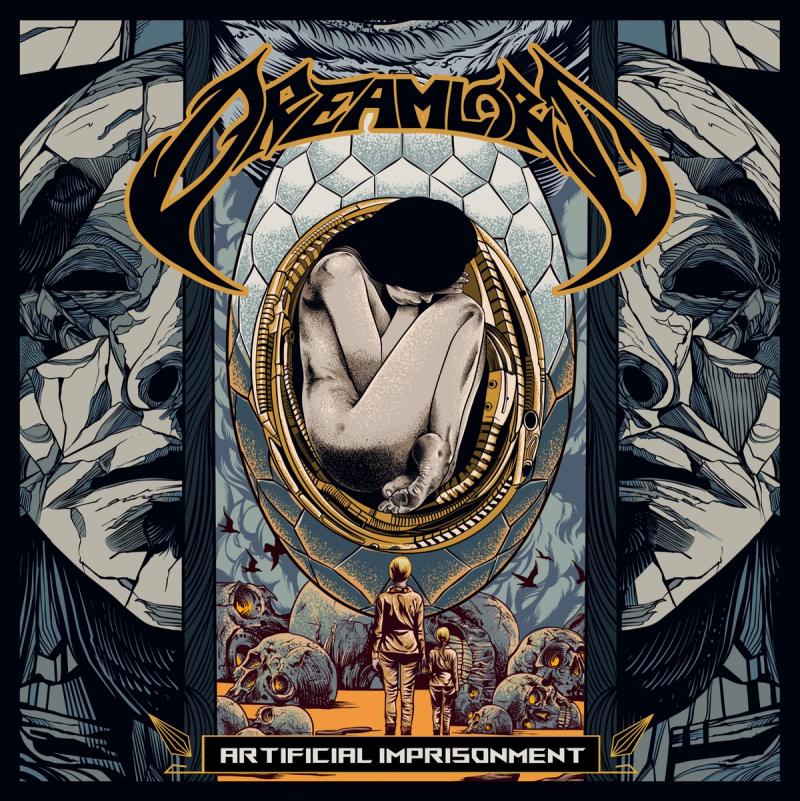
Artist
Dreamlord
Release Date
September 12, 2025
Label
Independent
Type
Artificial Imprisement
Artificial Imprisonment is an album driven by confrontation not just in volume or aggression but in intent. From its opening moments, it presents itself as a record unwilling to offer comfort or escapism. Instead, Dreamlord lean into pressure, tension, and unease, using heaviness as both a sonic weapon and a thematic device. This is an album that feels deliberately enclosed, mirroring its title through tightly wound structures, oppressive atmospheres, and an almost relentless forward motion.
Sonically, the album sits in a space where modern metal aggression intersects with groove driven weight and flashes of thrash urgency. The guitars form the backbone of the record, built on thick, forceful riffing that prioritises momentum over ornamentation. Rather than relying on constant technical fireworks, Dreamlord focus on riffs that feel physical, repetitive in the best sense, hammering away at the listener with purpose. These patterns create a sense of confinement, as though the music itself is looping inside invisible walls.
The rhythm section plays a critical role in reinforcing this feeling. Drums are sharp and assertive, frequently locking into tight, punchy patterns that drive the songs forward with urgency. There’s little wasted movement here; fills are functional rather than flashy, serving to heighten tension or signal shifts rather than show off technique. The bass adds density beneath the guitars, thickening the low end and giving the album its oppressive weight, often moving in tandem with the riffs to amplify their impact.
Vocally, Artificial Imprisonment is raw and confrontational. The delivery is aggressive without tipping into chaos, maintaining clarity even in the album’s most intense moments. Rather than overwhelming the instrumentation, the vocals sit within the mix as another weapon, sharp, direct and emotionally charged. There’s a sense of strain in the performance that aligns closely with the album’s themes, as though the voice itself is pushing against invisible restraints.
Lyrically and thematically, the album explores ideas of control, confinement, and psychological suffocation. The concept of imprisonment here feels less literal and more internal, shaped by systems, expectations, and artificial constructs that restrict autonomy. These ideas surface repeatedly across the record, creating a consistent narrative thread without becoming repetitive. Instead of spelling everything out, Dreamlord allow tone and delivery to do much of the work, letting frustration and resistance bleed through the music itself.
As the album progresses, subtle variations begin to emerge. While the foundation remains aggressive and heavy, certain tracks introduce slower, more deliberate passages that heighten tension through restraint rather than speed. These moments feel particularly effective, as they give the weight of the riffs more room to settle, making the subsequent surges of intensity feel even more punishing. The band show a strong understanding of pacing, knowing when to press forward and when to hold the listener in place.
Atmosphere is another key component of Artificial Imprisonment. While the album is rooted firmly in heaviness, there are darker undercurrents that run beneath the surface moments where dissonance, subtle effects, or stripped back sections introduce a sense of unease. These elements prevent the record from becoming one dimensional, adding depth and reinforcing the album’s psychological focus. Even in its most straightforward moments, there’s an underlying tension that never fully dissipates.
Production plays a significant role in shaping the album’s impact. The mix is dense and forward, placing the listener directly inside the sound rather than at a safe distance. Guitars hit with force, drums cut cleanly through the mix, and the vocals remain sharp and present without overpowering the instrumentation. This clarity ensures that even in the album’s heaviest moments, individual elements remain distinguishable, allowing the listener to appreciate the craftsmanship behind the aggression.
The latter half of the album feels increasingly resolute. Rather than escalating endlessly, Dreamlord channel their energy into tighter, more focused compositions. There’s a sense of endurance here, not triumph but survival. The music feels hardened, as if shaped by prolonged resistance rather than fleeting bursts of anger. This shift gives the album emotional weight, transforming it from a purely aggressive release into something more reflective and layered.
By the time Artificial Imprisonment reaches its closing moments, the record feels cohesive and complete. The themes introduced early on have been reinforced, challenged, and reshaped through the album’s progression. There’s no grand release or sudden light at the end of the tunnel instead, the album closes with a sense of unresolved tension that feels honest and intentional. It leaves the listener not with answers, but with the lingering weight of the questions it raises.
Artificial Imprisonment stands as a focused and uncompromising release. It’s an album that understands its identity and commits to it fully, using heaviness, repetition, and atmosphere as tools to explore confinement and resistance. Dreamlord deliver a record that doesn’t just hit hard, but presses in relentlessly, rewarding listeners who are willing to engage with its intensity and depth.