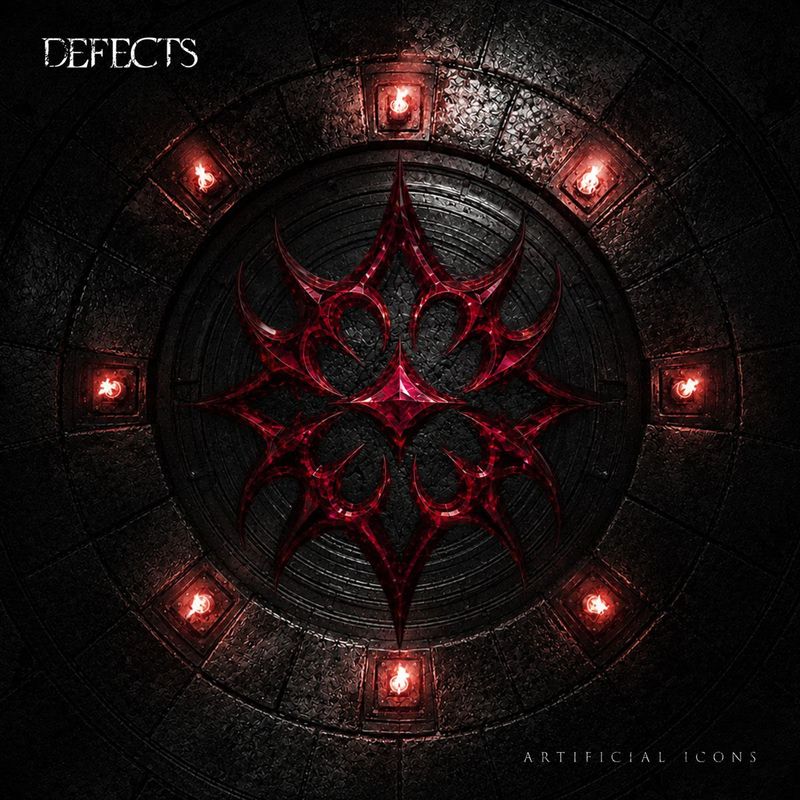
Artist
Defects
Release Date
16 October 2026
Label
Mascot Records
Written By
Phil
Artificial Icons
There is always a certain amount of pressure surrounding a second album. A debut gives a band the freedom to introduce themselves, make mistakes, experiment and most importantly, establish the foundations of what they could eventually become. Once that record has connected with people, however, the situation changes. Suddenly there are expectations. There is a sound people associate with the band, there are songs listeners have attached themselves to, and there is the inevitable question of whether the next record can move things forward without losing what made the first one work in the first place.
For Defects, Artificial Icons feels like an answer to that question.
Rather than treating their follow up as an opportunity to simply make Modern Error again with different songs, Defects have produced something that feels like a natural progression. The ingredients that made their previous material work are still firmly in place, the weight, the melody, the emotionally charged vocals and the modern metalcore production but there is a greater sense of confidence behind the songwriting. This isn’t a band desperately trying to prove that they belong in the scene. It sounds much more like a band beginning to understand exactly where they fit within it.
And that is what makes Artificial Icons such an interesting record.
On the surface, it is very recognisably a modern metalcore album. The guitars have plenty of weight, the drums are capable of going from restrained to punishing within moments, and the songwriting repeatedly builds towards those huge melodic passages that have become such an important part of contemporary heavy music. But Defects aren’t particularly interested in choosing between the accessible and the aggressive.
Instead, they make those two sides work together.
That’s an important distinction because there is a difference between a band simply putting a clean chorus between two heavy sections and a band actually understanding how melody can make heaviness more effective. Artificial Icons generally falls into the latter category. The lighter moments aren’t there simply because the genre expects them. They provide contrast, emotional context and, crucially, somewhere for the heavier moments to go.
When the guitars eventually drop into something considerably more punishing, it has an impact because the album hasn’t spent the previous three minutes trying to flatten you with sheer volume.
That sense of dynamics is one of the record’s biggest strengths.
Modern metal production has reached a point where making something sound huge isn’t particularly difficult. You can layer guitars, reinforce the low end, compress the drums and make a chorus sound enormous. The harder part is making those moments actually feel enormous. Defects understand that impact comes from contrast. There are moments on Artificial Icons where the band pull back enough to let the listener breathe before suddenly reminding you exactly how heavy they can be.
That makes the record considerably more engaging than something that simply operates at maximum intensity from beginning to end.
It also gives Tony Maue room to demonstrate why his vocals are such an important part of Defects identity.
There is a convincing physicality to his harsher delivery but what makes his performance more interesting is the contrast between that aggression and the more vulnerable side of his voice. The clean vocals aren’t treated as a completely separate personality. They feel like another part of the same emotional spectrum.
That matters because the themes running through Artificial Icons require more than anger.
There is anger here, certainly. There is frustration with systems, people and circumstances but underneath that is something more complicated. The album repeatedly touches on disappointment, alienation, uncertainty and the feeling of being trapped within circumstances that aren’t entirely within your control. That means the quieter and more melodic moments carry just as much emotional importance as the heavier ones.
Where Did I Go Wrong is a particularly good example of that side of Defects songwriting. Rather than relying solely on sheer aggression to communicate emotion, the song allows vulnerability to become part of the band’s identity. It doesn’t feel like Defects stepping away from their sound, it feels like them showing another side of it.
That is something the album does repeatedly.
The title Artificial Icons also gives the record a thematic thread that becomes increasingly apparent as it progresses. There is a fascination with the things society elevates, the people and structures we are encouraged to trust and the distance between the image presented to us and the reality underneath it. The record doesn’t necessarily give you a neat solution to those frustrations. Instead, it asks questions and sits with the discomfort.
That makes the album feel more substantial than a collection of songs written purely around the latest metalcore trends.
Heresy for example, brings a much more confrontational energy into the picture, while the album’s more introspective material pulls the listener in a completely different direction. Those songs work together because they aren’t attempting to communicate exactly the same emotion. One feels like an outward expression of anger, another can feel like someone turning that anger back upon themselves.
That push and pull is essential to the album.
There is also a strong sense of groove running underneath the record. Defects clearly understand that a great modern metal riff doesn’t necessarily need to be technically complicated. It needs to have movement. It needs to make you physically respond to it. The guitars repeatedly find that sweet spot between rhythmic heaviness and melody, giving the album a pulse that carries it through its quieter passages as well as its most aggressive ones.
That groove also gives the album an obvious live quality.
You can hear moments that feel built for a packed venue, where the audience could take over a chorus before the band crashes back into something heavier. There are sections that practically demand movement. That’s an important quality for a band like Defects because their music works particularly well when the physical and emotional sides are happening simultaneously.
You don’t simply listen to some of these songs.
You react to them.
The rhythm section plays a huge role in creating that effect. The drums give the guitars the necessary punch without making every section feel identical, while the bass helps create the low end foundation that gives the record its physical weight. It’s easy to overlook the bass on a modern metalcore album because the guitars naturally dominate the frequency spectrum, but here it is an important part of what makes the heavier passages feel substantial rather than simply loud.
The production deserves similar credit.
Artificial Icons sounds polished but it doesn’t sound lifeless. There is plenty of clarity within the mix, allowing the vocals to remain central and the guitars to retain definition, but the production hasn’t stripped away the aggression that makes the band work. The record sounds like a contemporary heavy release without falling into the trap of making everything so perfect that the human element disappears.
That balance becomes particularly important when you consider the album’s subject matter.
If these songs were surrounded by an overly glossy production that made everything feel disconnected from reality, the emotional impact would be reduced. Instead, there is enough grit underneath the polish to make the record feel grounded.
And while Defects clearly know how to write a big chorus, they don’t allow the melodic side of the album to completely dominate.
That is probably where Artificial Icons separates itself most effectively from some of the more commercially minded corners of modern metalcore. The band understand accessibility but they haven’t mistaken accessibility for simplicity. There are still enough changes in texture and intensity to keep the record interesting beyond the immediate hooks.
The album also benefits from not trying to make every song sound like the obvious single.
That might sound like a strange thing to praise but it’s important. When a record is constructed entirely around the idea that every song needs to deliver the same instant impact, the album can become incredibly predictable. Artificial Icons instead allows some songs and sections to develop more gradually.
That creates a better overall journey.
The previously released material works differently when placed within the album as a whole. Songs such as Artificial Icons, Heresy and Where Did I Go Wrong no longer feel like isolated statements designed to introduce the record. They become pieces of a larger emotional picture. Sign featuring Matthew K. Heafy, similarly makes more sense when viewed as part of Defects wider progression rather than simply as the album’s headline collaboration.
And that collaboration is worth discussing because guest appearances can be a double edged sword.
Bringing in somebody with Heafy’s profile naturally attracts attention but the success of a feature shouldn’t be measured by how much attention it generates. It should be measured by whether the song actually benefits from it. In this case, the collaboration feels like an enhancement rather than an attempt to temporarily turn Defects into something they’re not.
That’s important because Artificial Icons is ultimately about Defects finding their own identity.
The band have clearly absorbed a lot from the modern metalcore world around them but they aren’t simply assembling a list of genre characteristics and hoping they add up to a personality. Their melodic instincts, rhythmic approach and vocal dynamics are beginning to feel like parts of a recognisable Defects formula.
Not a formula in the negative sense.
A fingerprint.
That’s perhaps the biggest difference between a promising band and a band beginning to establish longevity. At some point, you stop describing a band’s influences and start describing the band themselves.
Artificial Icons feels like Defects moving towards that point.
There are inevitably moments where the record falls back on familiar modern metalcore conventions. Some arrangements will feel recognisable to anyone who spends a lot of time with the genre and there are moments where the band could perhaps have pushed themselves even further. The subject matter occasionally suggests a more experimental record than the music ultimately delivers but that isn’t enough to undermine what the album achieves. If anything, it leaves you curious about what Defects could do if they took those risks further next time, because the foundation is already here.
The songwriting is strong enough to support experimentation. The band clearly understand dynamics. They know how to write melody. They know how to make something heavy without simply making it noisy. Most importantly, they have developed enough of their own identity that they could afford to start bending the rules around it.
For now, however, Artificial Icons succeeds because it doesn’t force reinvention for the sake of it.
It is a confident second album.
It’s heavier when it needs to be, more melodic when the emotion calls for it, and mature enough to understand that sometimes the most effective thing a band can do is simply allow a song to breathe.
That maturity is particularly noticeable in the way the album handles vulnerability. Defects don’t treat emotional songwriting as a weakness that has to be hidden underneath layers of distortion. They allow those moments to exist openly and because of that, the heavier material carries more emotional significance.
The listener understands that the anger has come from somewhere.
The aggression means something.
That is where Artificial Icons becomes more than simply a collection of well produced metalcore songs.
There is a human element running through it.
The album’s themes may be broad enough to apply to society as a whole but many of the emotions are intensely personal. We’ve all experienced some version of disappointment, uncertainty or the feeling that the world around us isn’t quite what we were promised. Defects tap into those feelings without turning the record into something overwhelmingly bleak.
There is still energy here.
There is still fun.
There are still riffs that make you want to move.
The album simply understands that those things can coexist with something more emotionally substantial.
That is why the sequencing matters so much. The record needs its quieter moments because without them, the heavier moments would lose their significance. It needs the melodic hooks because without them, the darker lyrical themes could become exhausting. It needs the aggression because without it, the vulnerability could become overly sentimental.
Defects have found a surprisingly effective equilibrium between those elements.
And when the record is working at its best, you don’t even notice that balance happening.
You simply hear a song that feels right.
That’s ultimately what makes Artificial Icons successful.
It doesn’t feel like Defects have sat down and calculated exactly how much melody, heaviness, atmosphere and aggression a modern metalcore album requires. It feels more instinctive than that. The songs dictate what they need, and the band follow them.
There is still a sense that Defects have another level to reach, and that may be the most exciting thing about this record. Artificial Icons feels like progression rather than arrival. It is more confident than their earlier material but it doesn’t suggest that they’ve exhausted their possibilities.
If anything, it opens the door.
The next step could see them become more experimental with atmosphere. They could push the contrast between their heaviest and most vulnerable material even further. They could take some of the songwriting risks that occasionally sit just outside the edges of this album and make them central to their next one.
But none of that takes away from what they’ve achieved here.
A second album should make you believe a band has a future.
Artificial Icons does exactly that.
It demonstrates that Defects weren’t simply a band who happened to make an impressive debut. There is genuine progression here, both musically and emotionally and the band’s identity feels clearer as a result. They have taken the core characteristics that made Modern Error work and developed them rather than simply repeating them.
The result is an album that can satisfy the listener looking for something heavy while still giving plenty to anyone who wants emotional depth and memorable songwriting.
It isn’t revolutionary.
It doesn’t need to be.
What matters is that it feels authentic to the band making it.
And perhaps that is particularly fitting for an album called Artificial Icons. In a musical landscape where image, branding and manufactured moments can sometimes feel as important as the music itself, Defects have produced a record that feels much more interested in the actual emotion underneath the surface.
The result is a record with plenty of muscle, but also plenty of heart.
Artificial Icons is the sound of Defects becoming more assured, more ambitious and more comfortable with their own identity. It doesn’t abandon the accessible qualities that made them appealing, nor does it compromise the aggression that gives the band their edge. Instead, it brings those elements together and gives them a more mature emotional context.
There are riffs here that will work in a sweaty club.
There are choruses that will stay in your head.
There are moments that will make you want to throw yourself into the nearest mosh pit.
And there are others that will probably hit considerably harder when you’re listening alone.
That combination is what makes the album work.
Defects haven’t attempted to reinvent modern metalcore with Artificial Icons. They’ve done something arguably more difficult, they’ve taken a familiar musical language and made it increasingly their own.
This is a band that now feels like it has something to build upon.
And if Artificial Icons is an indication of where they’re heading, Defects story is only getting started.