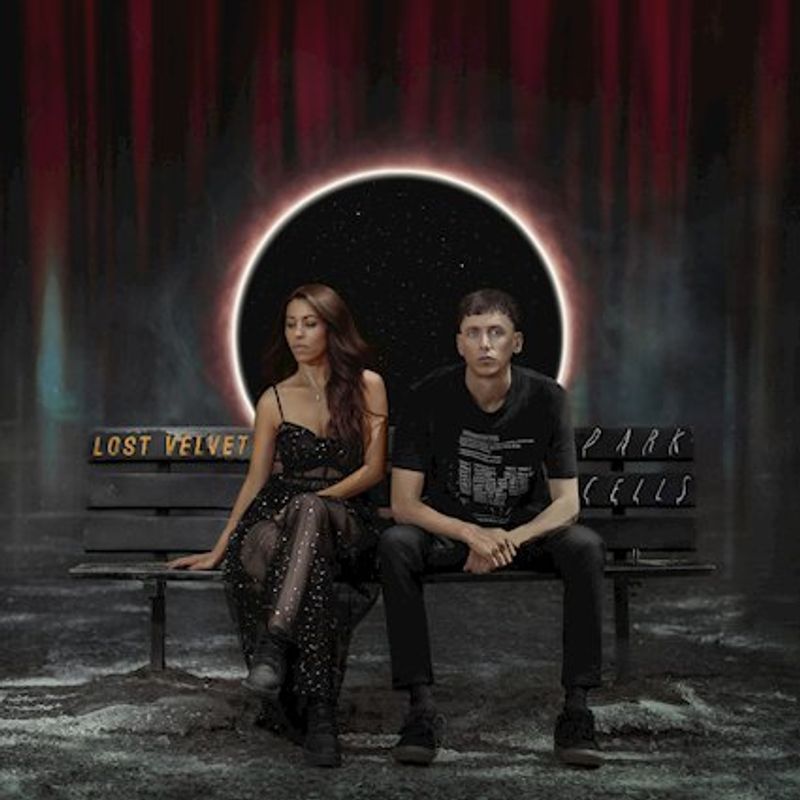
Artist
Lost Velvet
Release Date
September 4, 2026
Type
Dark Cells
Lost Velvet – Dark Cells
Album Review
There is something immediately enclosed about Dark Cells. Even before Lost Velvet begin leaning into the album’s heavier textures, the record feels as though it is taking place within a restricted emotional space. Its guitars are wide, but the world they create is claustrophobic. Its vocals are layered, but they often sound isolated. Its melodies carry traces of warmth, yet almost every moment is surrounded by a sense of distance, regret or emotional exhaustion.
That contradiction sits at the centre of the album. Dark Cells is capable of sounding enormous, particularly when its distorted guitars rise into dense walls of sound but it is rarely triumphant. The scale of the music does not suggest freedom. Instead, the band use that weight to reinforce the feeling of being trapped inside memories, damaged relationships and thoughts that repeat until they become impossible to separate from reality.
Across the record, Lost Velvet move between atmospheric alternative rock, shoegaze, grunge, post rock and heavier, more metallic tones. However, Dark Cells never feels like a collection of stylistic experiments. The production gives everything a shared identity. Guitars blur into one another, vocals sit deep inside the arrangements and the rhythm section provides a steady foundation without constantly forcing itself to the foreground. The result is a record that feels unified by mood rather than confined to a single genre.
The opening moments of 2003 establish that mood patiently. A broad, melancholic guitar progression is allowed to breathe before the vocals arrive, immediately creating a feeling of looking backwards. There is nostalgia within the music, but it is not comforting. It resembles the unease of returning mentally to a period of life that once felt significant and discovering that the memory has become incomplete.
The lyrics introduce uncertainty and disorientation, with references to running away, not knowing which direction to take and falling behind. These ideas become increasingly important as the album progresses. Lost Velvet repeatedly return to movement throughout Dark Cells, but very little of that movement leads anywhere. People run, leave, return, fall behind and attempt to start again, yet the emotional destination often remains unchanged.
That gives the opening track an understated importance. It does not need a dramatic beginning because its purpose is to place the listener inside the album’s emotional environment. The vocals appear to drift through the instrumentation rather than standing above it, and the elongated delivery makes each line sound exhausted before it has even finished. Layered harmonies add scale, but the song never loses its sense of loneliness.
The title track deepens that atmosphere by bringing the guitars forward with far greater weight. Dark Cells is more physical and imposing, built around a low, blunt riff and a controlled rhythm that gives the song a slow, deliberate force. There is something almost mechanical about its movement, yet the surrounding vocal textures prevent it from becoming cold.
Instead, it feels like a collision between industrial pressure and dreamlike unease. Fragmented lyrical images concerning shadows and movement sit alongside the repeated act of wondering why and wondering how. The lack of a clear answer is central to the song’s impact. It feels less like a narrative and more like an obsessive thought cycle.
That sense of emotional repetition continues throughout the album. Lost Velvet are not interested in presenting pain as a clear sequence with a beginning, middle and end. Their songs often feel suspended within the moment after something has gone wrong, when the mind continues returning to the same questions despite knowing that no satisfying answer is likely to arrive.
The band reinforce that feeling through repetition in the arrangements. Guitar figures, vocal lines and short phrases circle repeatedly becoming heavier or more emotionally charged through persistence. This is especially effective because the repetition rarely feels like filler. It represents the album’s emotional language. These are thoughts that cannot be escaped simply because they have already been expressed once.
Burnt demonstrates this from a quieter starting point. Its clean guitar pattern and slow rhythmic pulse create more space, allowing the vocals to feel slightly more exposed. The song’s concern with secrecy, lies and whether something was ever truly real brings a more personal edge to the album’s uncertainty.
There is no explosive confrontation. The delivery remains controlled, almost numb, and that restraint makes the emotion more convincing. It sounds like the argument has already taken place internally many times before. The repeated idea of bringing something right back gradually takes on several meanings at once. It could represent returning pain, reclaiming power, reopening a buried conversation or dragging a concealed truth back into view.
Lost Velvet often leave their lyrics open enough for those interpretations to coexist. The language across Dark Cells is generally simple and direct, but it is placed inside arrangements that make it feel ambiguous. A short phrase can sound accusatory in one moment, defeated in another and strangely comforting when it returns beneath a different guitar layer.
The record becomes increasingly focused on absence and emotional abandonment. There is one of the clearest examples, opening with a thick, slightly dissonant guitar figure that immediately feels more confrontational. The repeated recognition that nobody is waiting and nobody is listening strips the song down to a painful realisation: the narrator has remained emotionally present for someone who is no longer truly there.
The phrase I’m losing you again carries particular weight because of the final word. This is not a single unexpected collapse. It is part of a pattern. The relationship has either broken before or has repeatedly approached the same point of failure. That cyclical quality fits perfectly within the album’s wider structure, where emotional damage is rarely portrayed as a clean event.
The song gradually becomes more forceful, but Lost Velvet resist giving it a fully cathartic release. Even at its largest, the music feels burdened rather than liberated. The repeated vocal line becomes less like a declaration and more like an acceptance of inevitability.
This refusal to provide easy release is one of the strongest qualities of Dark Cells. Many albums built around emotional heaviness rely on a final explosive moment to give the listener relief. Lost Velvet are more interested in preserving tension. Their heavier passages are powerful, but they often feel like the external sound of pressure increasing rather than the pressure finally breaking.
Downplay uses contrast to particularly strong effect. Its verses are relatively delicate, built around subdued bass movement, carefully spaced guitars and intimate vocals. The lyrics address somebody who refuses to speak honestly, creating the sense of a conversation that has been delayed for too long.
When the guitars widen into the chorus, the change is enormous. The repeated word downplay is stretched across a dense wall of distortion, transforming the frustration hidden within the verses into something far more imposing. The dynamic shift is immediate, but it does not feel forced because the quieter sections already contain considerable tension.
That balance between intimacy and scale appears throughout the album. Lost Velvet can make a restrained guitar line feel as emotionally important as a huge distorted passage. The quieter moments are not simply introductions to the heavier ones. They allow discomfort to develop in a different form.
The album becomes especially direct on Brother While much of Dark Cells communicates through fragmented thoughts and abstract images, this song centres on the collapse of a relationship that once carried the weight of family. The line describing somebody as being like a brother immediately gives the emotion a more identifiable source.
The sense of betrayal is made more painful by the continued presence of affection. The song does not simply condemn the other person. It remembers the closeness that existed before the damage. This makes the separation feel reluctant, even when it is clearly necessary.
The instrumentation reflects that conflict. Shimmering guitars and soft harmonies initially create a mournful atmosphere before heavier layers enter beneath the vocals. The distortion does not overpower the sadness, it gives it physical weight. By the time the repeated closing phrase arrives, the song sounds caught between dismissal and grief.
That emotional complexity is important because Dark Cells rarely portrays relationships in purely simple terms. The people within these songs appear capable of causing pain while remaining deeply missed. Memories are damaging, but they are also difficult to abandon. Even moments of anger seem connected to a desire for understanding.
Right Back continues that desire through a more spacious and reflective arrangement. The clean guitars and restrained percussion create a hypnotic movement, giving the song the feeling of retracing familiar ground. Its references to returning to the start suggest an attempt to find the exact moment when a relationship or conversation went wrong.
There is a softer quality to the vocal layering here. Elsewhere on the record, the harmonies can feel ghostly or distant. On Right Back they carry a little more warmth, even though the song remains melancholic. It briefly suggests that returning to the beginning might offer some form of clarity.
However, the heavier guitar passages repeatedly interrupt that calm. These moments feel like unresolved emotion forcing itself back into the conversation. The song may want to return to something simpler, but the accumulated damage makes that impossible.
This idea of attempted return becomes one of the album’s strongest recurring themes. Lost Velvet repeatedly explore the desire to rewind, repair or revisit, while making it clear that returning physically or mentally does not restore what has been lost. The past can be approached, but it cannot be entered unchanged.
Half Right develops that tension through fragmented lyrics and a steady, melodic guitar foundation. Its short references to fading out, burning out and making a final attempt create the impression of emotional depletion. The words sound like pieces of thought rather than complete explanations, which suits the album’s inward looking character.
As the song builds, the repeated insistence that there is no escape from the underground becomes increasingly oppressive. The underground can be interpreted as a hidden emotional state, a destructive cycle, a relationship or even a version of the self that cannot be abandoned. Lost Velvet leave the image deliberately broad, allowing it to represent any space in which someone has become trapped.
The final instrumental expansion is one of the most effective passages on the album. The guitars become thicker without losing the melodic shape established earlier, creating the impression of something familiar being gradually consumed. A delicate piano ending follows, but it does not feel like peace. It is closer to the final trace left after the heavier sound has receded.
The album’s production deserves considerable credit for maintaining this atmosphere across ten tracks without flattening every song into the same shape. The guitars are consistently layered and immersive, but their function changes. At times they shimmer and drift. Elsewhere they grind, pulse or descend into slow, crushing riffs.
The vocals are treated almost like another instrument. They are frequently pushed into the surrounding sound rather than mixed as a separate focal point. This can make some lyrics less immediate, but it also gives the record much of its identity. The voices sound internal, as though the listener is hearing thoughts from inside the same enclosed space.
That production choice is especially effective on Summer’s Gone The song carries one of the album’s largest and heaviest guitar tones, moving with a slow, almost ceremonial force. Its title might initially suggest nostalgia for a brighter season, but the music removes any expectation of warmth.
Here, summer represents something already passing. It becomes another symbol for time, change and the disappearance of a period that once felt permanent. The repeated refrain has the quality of mourning, as though the narrator recognises the end of something while still being unable to detach from it.
A lead guitar movement rises through the heavier rhythm without becoming a conventional display of technical ability. It bends through the arrangement like an extension of the vocal grief. This is one of several moments where Lost Velvet allow the instruments to express what the lyrics deliberately leave incomplete.
The song’s repetition becomes increasingly hypnotic as it continues, but there is also a feeling of emotional stagnation. The season has gone, yet the narrator remains in the moment of its departure. That inability to move forward is present throughout the album, connecting the personal losses of Brother and There to the broader sense of time passing established by 2003
By the time Dark Cells reaches Thin Skies, the album’s emotional vocabulary has been fully established. The closing track initially feels more direct, opening with a firm riff and a clearer rhythmic push. However, the lyrics repeatedly return to the idea of nothingness, gradually emptying the song of any straightforward resolution.
The repeated statements about things always having been this way, never being the same and continuing unchanged create deliberate contradiction. The narrator appears unable to decide whether everything has transformed or whether the same pattern has simply continued under a different form.
That confusion feels completely appropriate for the end of the album. Dark Cells is not a record concerned with reaching clarity. It documents what happens when clarity remains unavailable. People leave without giving proper answers. Relationships collapse without a clean ending. Memories return without revealing whether they are accurate.
The repetition of nothing begins as a subdued statement before becoming something far more powerful. Additional vocals and instrumental layers gradually turn the word into a chant, communicating emotional numbness more effectively than a detailed explanation could.
The final choral textures give the ending a ceremonial quality, but there is no clear sense of closure. The album appears to dissolve rather than conclude. The listener is left within the same atmosphere established at the beginning, although the emotional weight of that atmosphere now feels far greater.
That circular structure is one of the reasons Dark Cells works so well as a complete album. Its songs are individually distinguishable, but they feel strongest when heard as parts of the same internal journey. The record repeatedly revisits similar emotional states from slightly different angles, allowing themes of betrayal, abandonment, memory and isolation to accumulate.
There are moments where the album’s consistency may initially make several tracks appear similar. Lost Velvet favour slow to mid tempo rhythms, buried vocal harmonies and arrangements that gradually expand through repeated guitar figures. However, the distinctions become clearer with closer listening.
The blunt heaviness of the title track is different from the emotional directness of Brother. The explosive dynamic of Downplay serves a different purpose from the slow mourning of Summer’s Gone. The nostalgia of 2003 is not the same as the emptiness of Thin Skies, even though both are surrounded by the same production atmosphere.
This is not a record built for immediate, disposable impact. Its strongest moments often reveal themselves gradually. A harmony becomes more noticeable on a later listen. A repeated lyric changes meaning once the album’s wider themes become clear. A guitar line that initially appears simple begins to carry more emotional weight because of what surrounds it.
The rhythm section plays an important role in allowing that detail to emerge. The drums remain controlled throughout, providing power without constantly attempting to dominate the mix. This gives the guitars and vocals space to create atmosphere while maintaining a sense of forward movement.
The album’s heaviness is therefore rarely based on speed. It comes from density, patience and repetition. Lost Velvet understand that a slowly repeated riff can become far more oppressive than a frantic one when it is given enough space.
Lyrically, Dark Cells is strongest when it communicates through suggestion. The writing rarely attempts to explain every detail of the situations being described. Instead, recurring phrases and images create the impression of a larger story existing outside the songs.
This approach allows the listener to place their own experiences inside the record. The relationships may be specific to Lost Velvet, but the feelings are recognisable, realising somebody is no longer listening, revisiting a conversation mentally, questioning whether something was ever genuine, watching time move forward while remaining emotionally stuck and having to separate from somebody who once felt permanent.
These emotions are not presented theatrically. Even the album’s largest moments retain a degree of restraint. The vocals rarely become aggressively confrontational, and the guitars are used to support the emotional atmosphere rather than turn the record into a constant display of heaviness.
That restraint ultimately makes Dark Cells feel more convincing. It sounds less like a performance of sadness and more like an attempt to live inside it long enough to understand its shape.
Lost Velvet have created a record that feels bruised, reflective and deeply enclosed. Its title is appropriate not only because of the darkness within the songs, but because the album repeatedly places the listener inside small emotional rooms from which there is no obvious exit.
The characters move through memories and relationships searching for answers, yet the walls remain intact. The past refuses to stay in the past, and each attempt to escape seems to lead back towards another unresolved feeling.
Dark Cells does not offer comfort in a conventional sense. What it offers instead is recognition. It understands the exhausting repetition of grief, regret and emotional uncertainty. It understands that some losses do not arrive once but continue happening internally long after the other person has gone.
Through its dense guitars, submerged harmonies and patient songwriting, Lost Velvet turn those feelings into something immersive. The record surrounds the listener slowly, allowing its details to become clearer while its emotional world grows increasingly difficult to leave.
By its end, Dark Cells feels less like a collection of songs and more like one sustained state of mind, heavy but never needlessly aggressive, melodic without becoming comforting and deeply atmospheric without sacrificing emotional clarity. It is an album that lingers because it never fully resolves the questions it raises, leaving its shadows in place long after the final sound has faded.