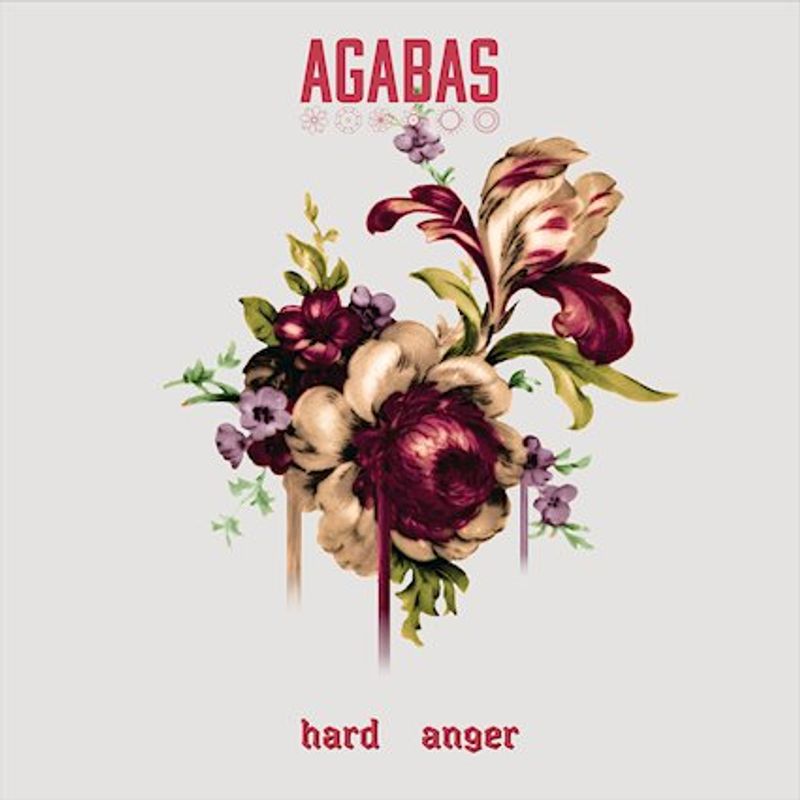
Artist
Agabas
Release Date
March 5, 2026
Label
Mascot Records
Type
Hard Anger
Hard Anger by Agabas is an album that actively resists being understood in conventional terms. Rather than existing neatly within the boundaries of black metal or extreme metal more broadly, Hard Anger operates as a sustained emotional state. one rooted in tension, repetition, and psychological unrest. The band’s self described Death Jazz label isn’t a gimmick here, it’s a genuinely useful lens through which to understand how this album moves, mutates, and refuses resolution.
Across all 13 tracks, Hard Anger feels less like a collection of individual songs and more like a single, fractured expression stretched across multiple forms. It doesn’t rely on hooks, climaxes, or dramatic shifts. Instead, it circles ideas obsessively, returning to the same emotional ground again and again, much like a jazz composition worrying at a motif until it starts to fray. The anger here isn’t explosive, it’s internalised, obsessive and slowly corrosive.
The production plays a crucial role in reinforcing this atmosphere. Everything is raw, dry, and exposed, but never careless. Guitars sit front and centre, brittle and abrasive, often locked into repetitive figures that feel more ritualistic than riff driven. These patterns don’t guide the listener forward so much as trap them in place, creating a sense of emotional stasis that becomes increasingly uncomfortable as the album progresses. The bass and drums act more as structural supports than focal points, keeping the music grounded while allowing the guitars to dictate the psychological pressure.
Vocals throughout Hard Anger feel closer to emotional rupture than performance. They emerge unevenly from the mix, sometimes sounding strained and wounded, other times distant and hollow. Rather than commanding attention, they feel submerged within the instrumentation, reinforcing the idea that this album isn’t about delivering statements, it’s about documenting collapse. This approach fits naturally within the Death Jazz framework, where expression takes priority over clarity or control.
The album opens with Kjærlighet for alle, immediately establishing one of its central contradictions. The title suggests warmth or universality, yet the music beneath it feels closed off and hostile. The repetition here is deliberate, grinding away without offering release. Jævla menneske sharpens that hostility, pushing the anger outward. Its tighter pacing and more confrontational energy make it one of the album’s most aggressive moments, though it still avoids anything resembling catharsis.
As the album unfolds, Agabas demonstrate a strong sense of emotional pacing. En vakker himmel and En enkel sjel shift the focus inward, allowing bleak atmosphere and weary reflection to take centre stage. These tracks feel heavy not because of volume or speed, but because of resignation. The jazz influence becomes more apparent here in the way themes drift and subtly deform rather than resolve.
The middle section of Hard Anger is intentionally punishing. La blodet flomme and Se det for deg double down on repetition and restraint, refusing to offer dramatic payoff. The drumming stays locked in and functional, reinforcing the sense of emotional endurance rather than escalation. This is where the album truly tests the listener not through extremity, but through persistence.
Tracks like Vis meg alt and Arv deepen the album’s introspective weight. There’s a strong sense of inevitability running through them, as if the anger being expressed is inherited rather than chosen. The cyclical nature of the riffing mirrors this idea perfectly, giving the impression of emotional patterns that repeat regardless of intent or awareness.
På åpent hav feels like a quiet turning point. The music opens up slightly, evoking isolation and emotional distance rather than confrontation. The anger here feels spent, replaced by something emptier and more detached. It’s a subtle but important shift that sets the tone for the album’s closing stretch.
That descent is completed by the final three tracks. Kill is brutally minimal and suffocating, driven by obsessive repetition that feels compulsive rather than violent. The vocals sound particularly unhinged here, as if control has fully eroded. Mørke Daga slows the momentum just enough to let despair settle in, offering one of the album’s most emotionally devastating moments through sheer resignation rather than intensity.
Closing track The Wizard feels detached from reality altogether. Its looser structure and abstract movement give the impression of fading out rather than concluding. Vocals sink into the instrumentation, and the riffs feel ritualistic and unresolved. It’s not an ending that provides answers, it simply allows the album to dissolve.
Taken as a whole, Hard Anger is a deeply committed and uncompromising release. Agabas use the Death Jazz concept not as a novelty, but as a framework for emotional honesty, repetition, and decay. This is not an album built for casual listening or genre expectations. It demands patience, immersion, and a willingness to sit with discomfort and in doing so, it leaves behind a lingering emotional residue that feels impossible to fully shake.