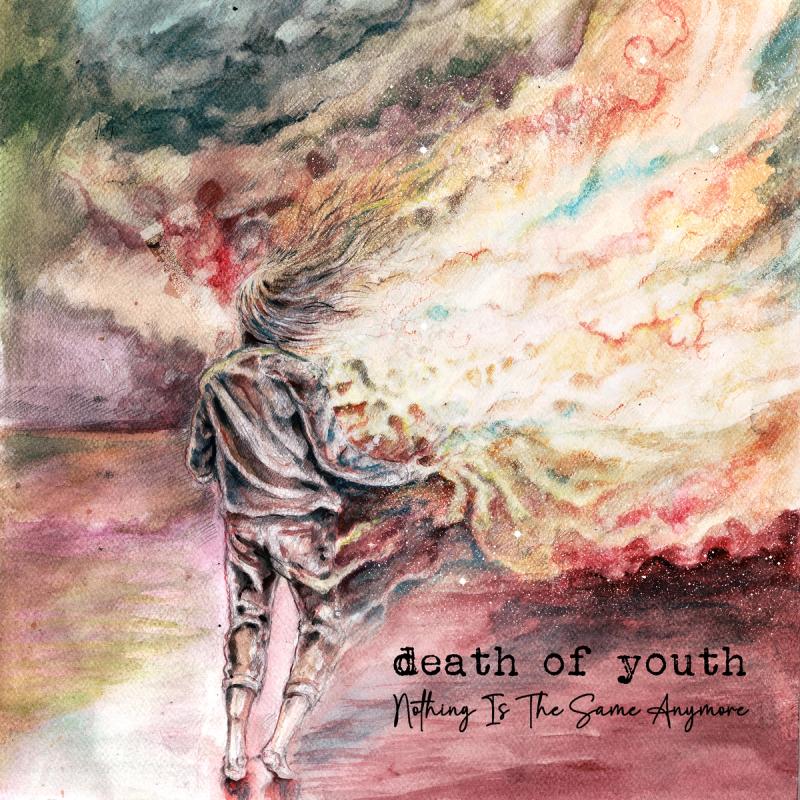
Artist
Death Of Youth
Release Date
February 16, 2026
Label
Engineer Records
Type
Nothing Is The Same Anymore
There’s a particular kind of fatigue that settles in when you realise the world isn’t going to correct itself. Not dramatically, Not cleanly. It just keeps moving forward, carrying its contradictions with it, asking you to adapt or harden. Nothing Is The Same Anymore lives in that space, not at the point of breaking, but in the long aftermath, where awareness lingers and optimism has to be rebuilt from something more honest.
From the outset, Death Of Youth make it clear this isn’t a record chasing urgency for its own sake. Desensitised opens like a slow exhale, capturing the emotional numbness that follows prolonged exposure to chaos, personal, political, cultural. It doesn’t scream. It observes. There’s an understanding here that constant outrage eventually dulls the senses, and that survival often masquerades as indifference.
Rumination follows like an internal echo chamber. The song circles its own thoughts, mirroring the way unresolved feelings replay when there’s no clear outlet for release. It’s introspective without becoming self indulgent, acknowledging that sometimes the most exhausting conflicts are the ones we replay alone. That internal tension carries into Fix Your Heart or Die, a track that feels less like a threat and more like a bleak ultimatum imposed by modern life itself. Emotional repair becomes mandatory when vulnerability is no longer optional, when staying broken starts costing more than it protects.
As the album progresses, it begins to widen its focus. Bystander confronts the quiet guilt of inaction. the moral grey area between awareness and involvement. It doesn’t accuse so much as it reflects, forcing the listener to recognise how often distance becomes a shield. The Inverse of Patriotism sharpens that reflection into critique, questioning loyalty, identity, and the narratives we inherit without consent. Rather than rejecting belief outright, the track interrogates what belief costs when it demands silence or obedience.
The middle section of the record feels intentionally unsettled. There’s a sense that the album is peeling layers away, first personal then collective, exposing how the two bleed into each other. By the time Invertebrate appears, the tone has shifted. The song carries a stripped back bitterness, aimed at complacency and moral collapse, but also at the exhaustion that allows them to persist. It’s not anger in its explosive form; it’s anger that’s been worn smooth by repetition.
Performance Art takes aim at surface level empathy and curated outrage, the rituals of caring that require little risk or follow through. In an era where visibility often replaces responsibility, the track questions what sincerity looks like when compassion becomes a public act. There’s an uncomfortable self awareness here, recognising that no one exists entirely outside the systems being criticised.
Castle Rock feels like a moment of pause not resolution, but grounding. It carries a sense of place, both literal and emotional, as if searching for something stable to hold onto amid constant change. The imagery suggests isolation, but also endurance, the idea that remaining upright is sometimes an act of defiance in itself.
The title track, Nothing Is The Same Anymore, closes the album without pretending things can return to how they were. There’s no nostalgia here, no desire to rewind. Instead, the song acknowledges transformation, the kind that leaves scars but also clarity. It accepts loss without romanticising it, recognising that growth often begins after the illusion of permanence dissolves.
What makes Nothing Is The Same Anymore resonate isn’t just its themes, but its restraint. Death Of Youth resist the urge to dramatise or moralise. The album trusts the listener to sit with discomfort, to recognise themselves in the spaces between words. It understands that for many, the struggle isn’t about finding hope, it’s about learning how to live honestly without it being guaranteed.
This is a record for people who feel overstimulated yet underheard, emotionally aware yet unsure where to place that awareness. It doesn’t offer escape or easy catharsis. Instead, it offers recognition, a reminder that feeling disconnected in a fractured world isn’t failure, but a response.
Nothing may be the same anymore but naming that truth is where something new begins.