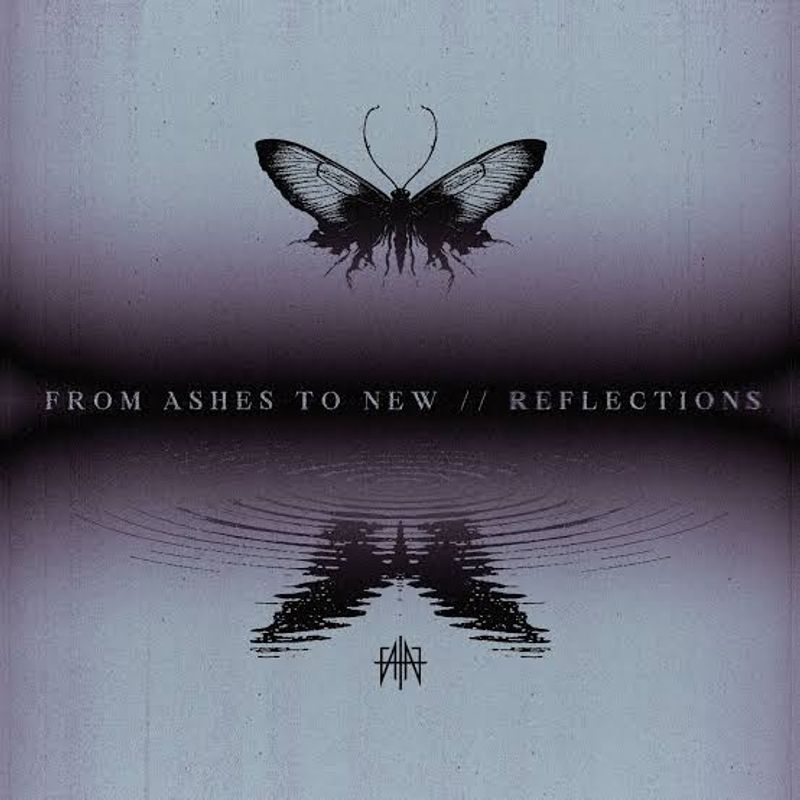
Artist
From Ashes To New
Release Date
April 17, 2026
Label
Better Noise Music
Type
Reflections
Reflections by From Ashes To New doesn’t arrive as a reinvention, it arrives as a consolidation of identity, a record that feels meticulously assembled from the ground up with a clear understanding of both the band’s strengths and their limitations. What makes this album stand out within their catalogue is not a drastic stylistic pivot but the level of control and intentionality that runs through every layer of its construction. There’s a sense that nothing here is accidental; every tonal shift, every dynamic swell, every melodic release feels considered, almost engineered to maximise impact without tipping into excess.
One of the most immediate differences compared to their earlier work is the album’s sense of structural discipline. Historically, the band’s blend of alternative metal, rap rock and electronic infused modern rock has leaned heavily on contrast, sharp transitions between aggression and accessibility, between rhythmic vocal delivery and soaring hooks. On Reflections, those contrasts are still central but they’re executed with far greater restraint. Instead of abrupt shifts designed to grab attention, the album leans into flow. Heavier passages are allowed to simmer before they erupt, and melodic sections aren’t just inserted as relief, they’re integrated as part of a broader emotional trajectory. This creates a listening experience that feels less fragmented and far more immersive.
The production plays a massive role in achieving that cohesion. There’s a noticeable clarity across the entire mix, where each element is given space without sacrificing the weight expected from the genre. The guitars carry a thick, modern tone but they’re not overly saturated, they sit in a way that prioritises groove and rhythmic precision as much as sheer heaviness. This allows the riffs to feel more purposeful rather than just dense. The low end, particularly the bass and kick, is tightly controlled, giving the album a grounded, almost mechanical pulse that drives everything forward without becoming overwhelming.
Layered on top of that is a subtle but effective use of electronic elements. Rather than dominating the soundscape, these textures function as connective tissue filling gaps, enhancing transitions and adding atmosphere. They often sit just beneath the surface, barely noticeable on a casual listen but essential in shaping the album’s overall tone. This restrained approach prevents the record from feeling cluttered, which is a trap many bands in this space fall into when trying to blend genres. Here, the electronics don’t compete with the guitars or vocals, they support them.
Vocally, Reflections is arguably one of the band’s most refined performances to date. The interplay between clean singing and harsher, more rhythmic delivery feels significantly more balanced. In previous releases, the transitions between these styles could feel abrupt or formulaic, almost as if they were ticking genre boxes. On this album, those shifts feel organic. The clean vocals carry a sense of vulnerability and melodic clarity, often anchoring the emotional core of a track, while the harsher elements inject urgency and tension without overpowering the mix. The rap influenced delivery, in particular is more tightly integrated into the instrumentation, locking in with the rhythm section rather than sitting on top of it.
Lyrically, the album leans deeply into introspection but what elevates it is the consistency of its thematic focus. The title Reflections isn’t just aesthetic, it’s embedded in the writing. There’s a recurring exploration of identity, self perception and the tension between internal struggles and external expectations. Rather than approaching these themes in a broad or abstract way, the lyrics feel grounded and direct, often framing emotional conflict in a way that’s accessible without becoming generic. There’s an undercurrent of self awareness throughout the record, as if the band is not only examining their experiences but also their place within the genre and industry.
Another key strength of the album is its pacing. It avoids the common pitfall of front loading intensity and losing momentum in the latter half. Instead, Reflections maintains a steady sense of progression, carefully balancing moments of impact with space for recovery. This ebb and flow give the album a narrative quality, even without focusing on individual tracks. It feels like a continuous journey rather than a sequence of isolated ideas, with each section feeding into the next in a way that sustains engagement.
What’s particularly interesting is how the album handles familiarity. There’s no denying that Reflections operates within a well-established sonic framework, fans of modern alternative metal will recognise many of its core elements. However, rather than feeling derivative, the album uses that familiarity as a foundation for refinement. It doesn’t attempt to break genre boundaries or introduce radically new ideas instead, it focuses on executing its existing formula at a higher level. This decision might limit its appeal to listeners seeking innovation, but it significantly strengthens its identity. The band isn’t trying to be everything, they’re trying to be the best version of themselves.
There’s also a noticeable emotional consistency that ties everything together. Even at its most aggressive, the album never feels detached or purely performative. The intensity always feels connected to the themes being explored, which gives the heavier moments a sense of purpose beyond just sonic impact. Conversely, the more melodic sections don’t feel like concessions to accessibility, they feel like necessary extensions of the album’s emotional range. This balance is crucial in preventing the record from feeling one dimensional.
If there’s any criticism to be made, it lies in the album’s reluctance to take risks. While the refinement and cohesion are impressive, there are moments where a more unexpected turn whether in structure, tone or experimentation could have elevated the album further. The commitment to a controlled, polished sound means that it rarely steps outside its comfort zone. For some listeners, that consistency will be a strength for others, it may feel like a missed opportunity for evolution.
Ultimately, Reflections stands as a testament to growth through refinement rather than reinvention. It captures From Ashes To New at a point where they fully understand their identity and are focused on perfecting it. The album’s strength lies in its cohesion, its disciplined approach to dynamics, and its ability to balance emotional depth with accessible, impactful songwriting. It doesn’t seek to redefine the genre but it doesn’t need to. What it does instead is deliver a tightly constructed, emotionally resonant record that feels deliberate in every sense, proving that sometimes progression isn’t about change but about clarity.