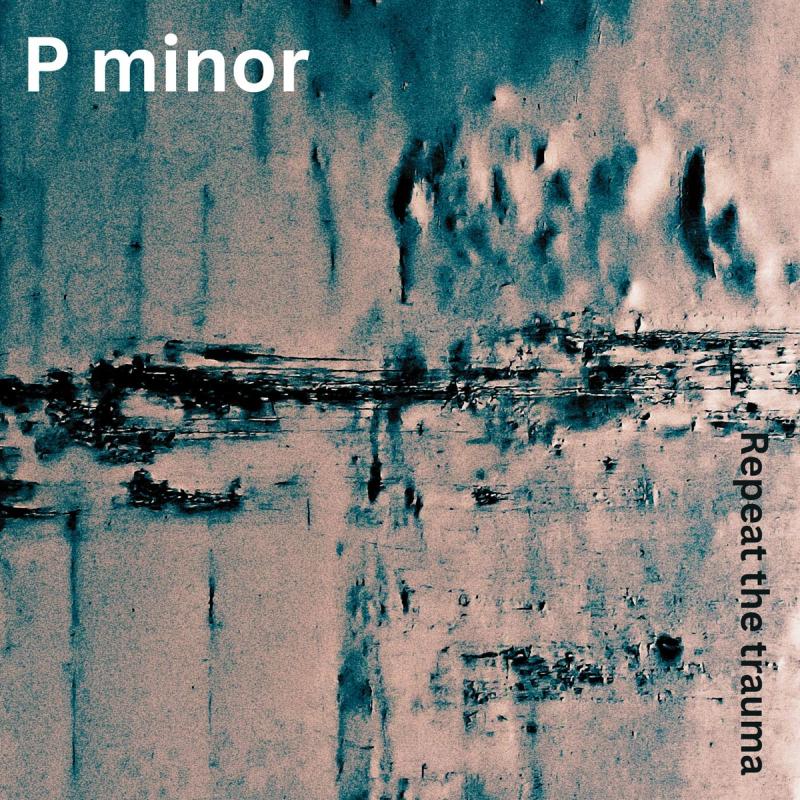
Artist
P Minor
Release Date
October 31, 2025
Label
Independent
Type
EPRepeat The Trauma
There’s an almost uncomfortable honesty threaded through Repeat the Trauma, the kind that doesn’t arrive in a dramatic reveal but slowly settles in your chest the longer you spend with it. This EP feels less like a statement and more like a confession you weren’t necessarily meant to overhear. P minor aren’t presenting answers here, they’re documenting the process of going in circles, emotionally speaking, and trusting that the listener understands that sometimes recognition is as far as things go.
From the outset, the EP establishes a tone that’s intimate but unsettled. There’s a feeling of emotional proximity, as if the songs are unfolding just inches away rather than being projected outward. The production plays a huge role in this. Nothing feels overly sharpened or artificially inflated; instead, the sound design leaves space for imperfection, for moments to feel slightly frayed at the edges. That looseness gives the music a lived in quality, like these tracks existed long before they were recorded.
Vocally, the performances carry a fragile weight that anchors the entire EP. There’s restraint in the delivery, but it never comes across as distant or detached. If anything, it feels like a conscious effort to maintain composure while everything underneath is shifting. The vocals don’t dominate the mix; they coexist with it, often blending into the instrumentation in a way that reinforces the themes of emotional entanglement and internal conflict. It’s the sound of someone trying to articulate feelings they’re still actively processing.
As the EP unfolds, repetition becomes more than a thematic idea, it becomes structural. Emotional motifs recur, lyrical sentiments echo one another, and certain sonic textures reappear across tracks, giving the project a cyclical feel. This isn’t accidental. Repeat the Trauma mirrors the way unresolved emotions resurface, dressed slightly differently each time but fundamentally unchanged. There’s something deeply human about that approach, and it’s where the EP finds its emotional core.
Musically, P minor strike a careful balance between atmosphere and momentum. The arrangements never feel static, but they also refuse to rush toward release. Guitars ebb and drift, sometimes offering warmth, other times dissolving into something more distant and uneasy. Rhythms pulse quietly beneath the surface, guiding the songs forward without ever breaking the spell. Even when the music swells, it does so with control, avoiding the kind of explosive payoff that would feel out of place here.
One of the EP’s greatest strengths is its emotional pacing. Rather than front-loading its heaviest moments, Repeat the Trauma allows tension to accumulate gradually. Each track adds another layer, another perspective, another emotional residue. By the time you reach the latter half of the EP, the weight feels earned. You’re not reacting to a single moment, you’re responding to everything that’s been quietly building beneath the surface.
Lyrically, there’s a recurring sense of self-awareness that cuts through the emotional fog. These aren’t songs written from a place of denial. There’s an understanding here, sometimes painfully clear that certain patterns are being repeated despite knowing better. That awareness doesn’t bring relief; if anything, it intensifies the frustration and vulnerability that runs through the EP. It’s a nuanced portrayal of emotional cycles that feels far more honest than narratives built around growth or closure.
What really sets Repeat the Trauma apart is its refusal to dramatise pain for effect. There’s no sense that these songs are reaching for sympathy or validation. Instead, they sit with discomfort and allow it to exist without justification. That quiet confidence gives the EP a maturity that lingers long after it ends. It trusts the listener to recognise themselves somewhere within it, without being told how to feel.
As the EP draws toward its conclusion, there’s no grand emotional release waiting at the end and that feels entirely appropriate. The closing moments don’t resolve the cycle; they acknowledge it. There’s a subtle sense of exhaustion, but also acceptance, as if the act of naming the pattern is itself a small step forward, even if the pattern remains. It’s a powerful choice, and one that reinforces the EP’s emotional authenticity.
Ultimately, Repeat the Trauma feels like a snapshot of an ongoing internal dialogue rather than a finished chapter. It’s reflective, intimate, and quietly heavy, rewarding listeners who are willing to sit with it rather than skim the surface. P minor continue to refine a sound that prioritises emotional truth over spectacle, and this EP stands as one of their most cohesive and affecting releases to date.
This is music for late nights, for moments of introspection, for recognising parts of yourself you might not be proud of but can’t ignore. Repeat the Trauma doesn’t offer escape, it offers understanding. And sometimes, that’s exactly what sticks with you the longest.