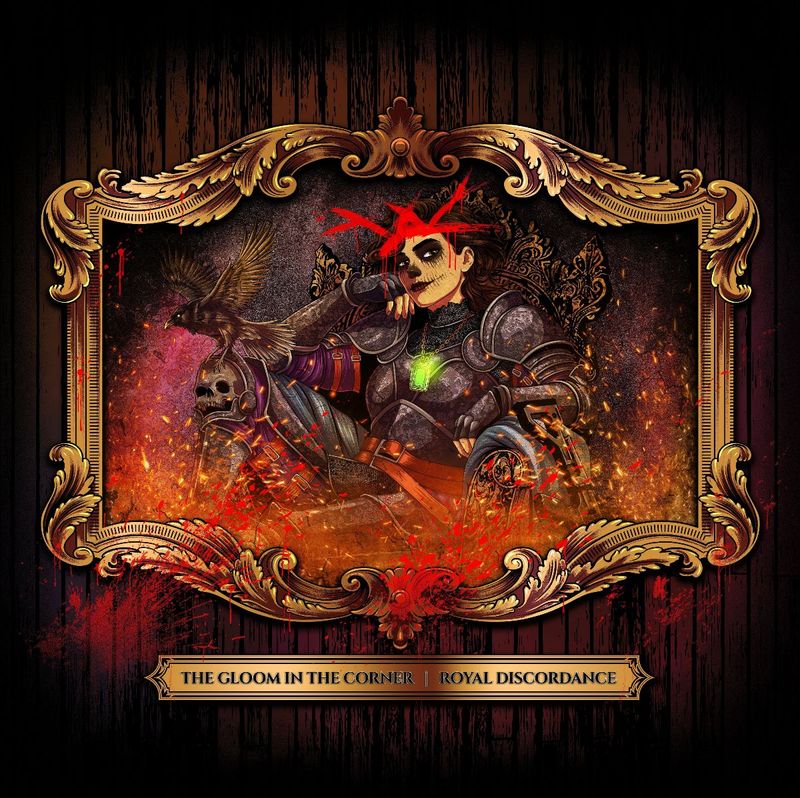
Artist
The Gloom In The Corner
Release Date
February 27, 2026
Label
Sharptone Records
Type
Royal Discordance
There are heavy albums that aim to impress, and then there are heavy albums that aim to consume. Royal Discordance firmly plants itself in the latter category. This isn’t simply a 12 track display of aggression and theatrics, it’s a carefully architected descent into instability, authority, ego, collapse and emotional reckoning. It feels less like a playlist and more like a psychological event unfolding in real time.
From the outset, the scale is undeniable. The record moves with cinematic intent, not in a superficial “add strings and call it epic” way but in how it structures tension and release. There’s a genuine sense of world building embedded in the songwriting. Atmosphere isn’t decoration here, it’s structural. The orchestration, ambient textures and dramatic pauses all function as narrative devices, reinforcing the themes of fractured power and internal warfare.
One of the most striking qualities of Royal Discordance is its discipline. Despite the theatrical ambition, the band never lose control of the framework. Every explosive breakdown feels measured. Every sudden tempo pivot feels strategic rather than chaotic. Even at its most relentless, the album sounds composed, like a war plan being executed step by step. That calculated aggression gives the record weight beyond simple heaviness.
The guitar work deserves serious attention. The riffs aren’t just there to pummel, they carve space. There’s a sharpness to the tone that cuts through the dense layers of production, but there’s also groove woven into the violence. The rhythmic interplay between guitars and drums creates a sense of forward momentum that rarely stalls. When the band lean into syncopation and abrupt stops, it feels like controlled disruption, mirroring the instability at the core of the album’s themes.
The rhythm section is equally commanding. The percussion shifts between militaristic precision and unhinged bursts of speed, reinforcing that push and pull between order and chaos. Bass lines often sit subtly beneath the surface, but they thicken the atmosphere and add depth to the darker passages. It’s a foundation that allows the more dramatic elements to soar without collapsing under their own ambition.
Vocally, this is where the emotional core of the album truly reveals itself. The harsh delivery carries venom, authority and theatrical menace but beneath that, there’s vulnerability threaded through certain melodic passages. The clean vocals don’t act as a soft landing, they often feel like the moment the mask slips. The contrast between the two styles doesn’t just create dynamic range, it reinforces the album’s central conflict between control and collapse.
Lyrically and tonally, Royal Discordance operates in a space where ego, rebellion, identity and consequence intertwine. There’s an undercurrent of internal monologue running through the record, a sense that characters are wrestling not just with external enemies but with their own fractured ideology. Authority figures crumble. Certainty erodes. Loyalty feels unstable. The album’s title itself suggests imbalance at the highest level, and musically that imbalance is reflected in sharp dynamic shifts and tonal pivots.
What prevents the album from feeling overwhelming is its pacing. Across 12 tracks, there’s a clear understanding of when to escalate and when to restrain. The record breathes without losing tension. Moments of melodic clarity don’t dilute the intensity, they heighten it. By allowing space between the detonations, the band make each subsequent explosion hit harder.
Production wise, everything feels intentionally layered. The mix balances density with clarity, ensuring the orchestral elements and atmospheric details never drown the core instrumentation. There’s polish here, but not at the expense of grit. The edges remain sharp. The impact remains physical.
The final stretch of the album feels especially significant. Rather than simply closing with another heavy statement, the concluding movements carry emotional resonance. There’s a sense of aftermath of consequences settling in. It doesn’t feel like a victory lap. It feels reflective. Perhaps even mournful. That tonal shift adds maturity to the overall arc and prevents the album from ending on a one dimensional note.
What truly elevates Royal Discordance is its conviction. The band commit entirely to the concept. They don’t half step into theatricality, they embrace it fully, while still grounding the execution in tight musicianship and emotional authenticity. That balance is difficult to achieve, but here it feels natural.
For P&L Tunes, this is the kind of album that reminds you why immersive, concept driven heavy records still matter. In an era built on instant gratification and single track cycles, Royal Discordance demands start to finish engagement. It rewards patience. It reveals layers on repeat listens. And it leaves an impression long after the final note fades.
This isn’t just heavy music for the sake of noise.
It’s calculated tension. It’s narrative driven aggression. It’s emotional collapse dressed in orchestral grandeur.
And above all, it’s a band fully aware of their identity and unafraid to push it to its most dramatic extremes.