Artist
Dead Reynolds
Release Date
April 24, 2026
Type
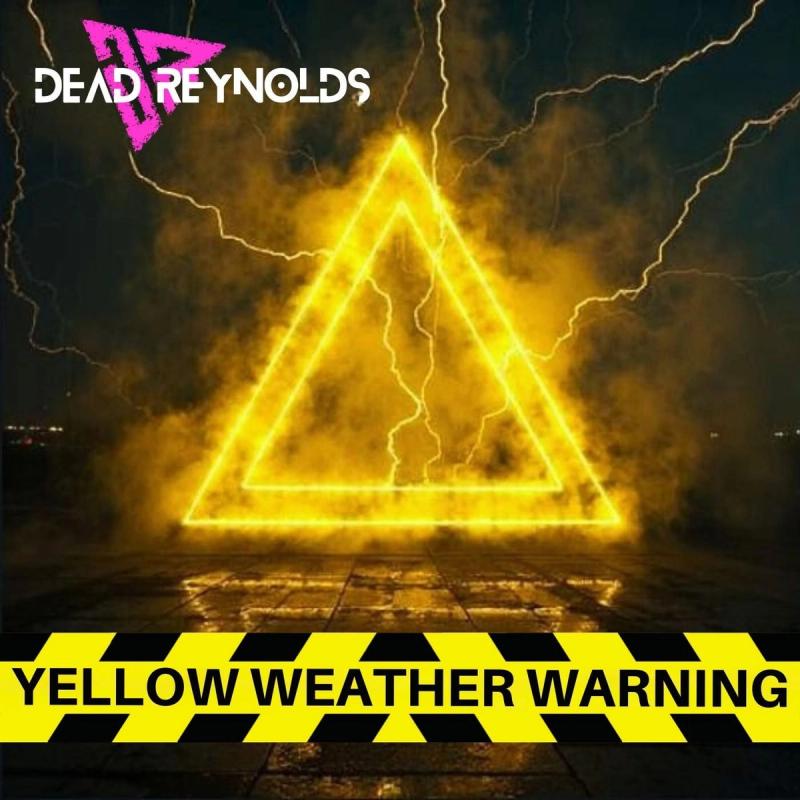
Yellow Weather Warning
There’s something immediately striking about Yellow Warning that goes beyond just sound, it’s the sense of intent. From the opening moments, Dead Reynolds don’t feel like a band testing ideas or experimenting with direction, they sound locked in, fully aware of the emotional and sonic space they want to occupy. What unfolds across the album isn’t just a collection of tracks, but a carefully controlled release of tension, built on contrast, atmosphere and a constant undercurrent of unease.
At its core, Yellow Warning thrives on duality. It exists in that space between modern alternative rock accessibility and something far more internal and volatile. On the surface, there are hooks that land instantly, choruses that feel expansive and almost anthemic, and melodies that carry a sense of familiarity. But beneath that, there’s a weight that never really lifts, a persistent emotional pressure that gives the album its identity. It’s this layering that makes the record so effective; it pulls you in with immediacy, then keeps you there through depth.
Sonically, the album is built around control. The guitars are a central force, but they’re never overindulgent. Instead, they’re used with precision, sometimes driving and aggressive, other times textural and expansive, often sitting just on the edge of eruption. There’s a tightness to the rhythm section that keeps everything grounded, allowing the band to explore more atmospheric spaces without losing impact. The drums in particular feel purposeful, not just in their energy but in their restraint, knowing when to hold back to let tension build before pushing forward.
The production plays a huge role in shaping the album’s identity. It’s polished but not sterile, clean enough to give every element clarity, yet still retaining enough grit to preserve the emotional rawness at the heart of the record. There’s a noticeable attention to space, nothing feels overcrowded, and that breathing room allows the dynamics to hit harder. When the album swells, it feels earned. When it pulls back, it feels intentional rather than empty.
Vocally, Yellow Warning reaches another level entirely. There’s a genuine sense of performance here not just singing but expression. The delivery constantly shifts between introspection and confrontation, often within the same track. Softer moments feel fragile, almost like thoughts being processed in real time, while the more intense sections carry a sharpness that borders on defiance. That range is what gives the album its emotional credibility. It doesn’t rely on volume or aggression alone to create impact; it understands the power of restraint just as much.
Lyrically, the album feels deeply introspective without becoming abstract. There’s a clear thread of identity running throughout, questions of self worth, internal conflict and the struggle to reconcile who you are with who you feel you’re becoming. It never feels overly poetic for the sake of it instead, it comes across as honest and unfiltered, like a series of internal dialogues being pulled into the open. That honesty is what makes the heavier moments hit harder, because they feel rooted in something real rather than constructed.
What really elevates Yellow Warning is how it manages its pacing across all twelve tracks. There’s a deliberate ebb and flow that prevents the album from ever feeling one note. Tracks that lean into melody and openness act as necessary counterweights to the more aggressive, high intensity moments. But even in those more accessible sections, there’s always that lingering tension, a sense that something unresolved is sitting just beneath the surface.
The heavier moments on the album don’t feel like peaks in a traditional sense; they feel like emotional spikes. Songs like Parasite and Animal don’t just increase the energy, they shift the atmosphere entirely, becoming more suffocating, more immediate, more confrontational. The guitars feel denser, the vocal delivery more urgent and the overall sound more compressed, almost as if the walls are closing in. These moments act as emotional pressure points within the album, giving weight to everything that surrounds them.
In contrast, tracks like Drowning, Pieces, and Hide Away explore a more restrained dynamic but they’re no less impactful. If anything, these moments are where the album’s emotional core becomes most exposed. There’s a vulnerability here that feels unguarded, where the space in the instrumentation allows the vocals and lyrics to sit front and centre. Rather than breaking the album’s intensity, these tracks deepen it, showing that the tension isn’t just external, it’s internal, persistent and unresolved.
As the album progresses, there’s a subtle but important shift in tone. The latter part of Yellow Warning feels less explosive and more reflective, as if the earlier chaos has settled into something heavier but more understood. Someone Else and Wake Up don’t act as clean resolutions, but they do introduce a sense of clarity, not in the sense of answers but in acceptance. It’s a nuanced transition that adds depth to the album, ensuring it evolves rather than simply maintains momentum.
There’s also a cinematic quality to the way the album unfolds. Not in an overly grand or theatrical sense, but in how each track feels like part of a wider narrative arc. The transitions, the pacing, the dynamic shifts, they all contribute to a sense of movement, as if the album is taking you through different emotional states rather than just presenting them. That cohesion is one of the album’s strongest qualities, making it feel immersive from start to finish.
Ultimately, Yellow Warning is an album that understands its own weight. It doesn’t try to be everything at once, nor does it rely on excess to make its point. Instead, it focuses on control of sound, of emotion, of pacing and uses that control to create something that feels both immediate and lasting. It’s the kind of record that hits on first listen but reveals more with time, not because it’s overly complex, but because it’s layered with intention.
Dead Reynolds haven’t just created an album that sounds good, they’ve created one that feels purposeful. And in a space where so much music can blur together, that sense of identity is what makes Yellow Warning stand out.